
The Science · July 2, 2026
Why Do Joints Pop During an Adjustment — and Does the Sound Matter?
It's the most famous sound in chiropractic: the pop. Some patients love it, some are nervous about it, and almost everyone assumes it means something. So what's actually happening in the joint — and is the crack the sign of a "successful" adjustment? The science has good answers to both.
The pop is a gas bubble — not your bones
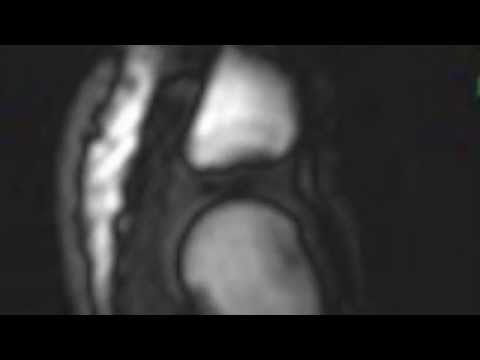
Your joints are bathed in synovial fluid, a natural lubricant that lets bones glide smoothly past each other. Dissolved within that fluid are gases, primarily nitrogen. When a joint is stretched quickly to the end of its range — whether that's you cracking a knuckle or a chiropractor delivering a precise adjustment — the joint surfaces separate rapidly, pressure inside the fluid suddenly drops, and that dissolved gas comes out of solution as a bubble. The audible pop is that rapid bubble formation and collapse, a process researchers call tribonucleation.
A Mayo Clinic hand surgeon has compared it to popping bubble wrap — and it explains a quirk every knuckle-cracker knows: you can't immediately crack the same joint twice. It takes roughly 20 minutes for the gases to re-dissolve before the joint can pop again.
Prefer to see it? This video breaks down the science of the crack:
No, cracking doesn't cause arthritis
The warning most of us heard growing up — "stop that or you'll get arthritis" — hasn't held up to research. Studies of habitual knuckle-crackers have found no link to arthritis, and no differences in range of motion, grip strength, or hand function compared to people who never crack. (The caveat: forcing a joint too far or in the wrong direction can strain ligaments — which is one of many reasons joint manipulation is best left to trained professionals, and why cracking should never be painful.)
Does the pop mean the adjustment "worked"?
Here's the part most people don't expect: the research suggests the sound itself isn't what drives the benefit. A 2022 study published in Chiropractic & Manual Therapies examined whether the audible pop during spinal manipulation plays a role in reducing patients' pain — a question worth asking, since patients and even some clinicians have long treated the sound as the mark of success.
The takeaway from this line of research: the pop is a byproduct of the joint moving, not the mechanism of relief. The goals of manipulation are improved joint mobility and reduced pain — and those outcomes don't hinge on whether your joints happened to be noisy that day. A quiet adjustment can work just as well as a loud one.
You don't need the crack to benefit — and it's always your call
Let's make this part unmistakable: manipulation is never a requirement of care at our clinic. It's one tool among several — alongside medical acupuncture, soft tissue therapy, joint mobilization, and rehab exercise — and the evidence-supported goals it serves, better range of motion and less pain, can be reached through more than one route.
Whether manipulation belongs in your plan is a decision we make together. Some patients find it's the technique that helps them most; others prefer their treatment without it, and their results don't suffer for it. If it's not for you, just say so — no convincing, no pressure, and no change in how seriously we take your recovery. Your comfort with your treatment is part of what makes it work.
What this means for your treatment at The Fix
This is exactly why we don't chase sounds in our clinic. We measure success the way the research does: can you move further, and does it hurt less? Joint manipulation is one tool among several we use — alongside medical acupuncture, soft tissue therapy, and rehab exercise — and it's applied where the evidence supports it: improving range of motion and reducing pain.
So if your adjustment pops, that's normal. If it doesn't, that's normal too. What matters is how you move when you get off the table — and in the weeks that follow.
Questions about whether manipulation is right for you? Ask us — and if you'd prefer treatment without manipulation, we'll build your plan around techniques you're comfortable with.
Sources & further reading
- Dr. Shawn Thistle — Does the popping sound with SMT matter for pain outcomes? (review of the 2022 Chiropractic & Manual Therapies study)
- Sciencing — What Really Happens When You Crack Your Knuckles
- Video: the science behind the crack
This article is general information, not medical advice. For guidance specific to your situation, book an assessment.